The best evidence is conditional, not magical.
Loyalty program research has a healthy skepticism built in. A program member can look more loyal simply because loyal customers are more likely to sign up in the first place. That is why the better studies try to separate program impact from self-selection.
Yuping Liu's long-term field study is useful for operators because it follows behavior over time instead of treating enrollment as proof of loyalty. The finding is practical: loyalty programs can increase purchase behavior and loyalty measures, but the strongest upside tends to appear among customers who are not already maxed out in their buying pattern.
Leenheer, van Heerde, Bijmolt, and Smidts make the same issue explicit. Members often have higher share-of-wallet than nonmembers, but that does not automatically mean the program caused the loyalty. After accounting for selection, program effects are more modest and depend on design.
Retention value depends on keeping the right customers.
The retention economics are still compelling. Harvard Business Review summarizes Bain-linked work showing that small improvements in retention can produce large profit effects, with the exact value depending on the industry, margin structure, and customer quality. For a local business, the key phrase is "the right customers."
A loyalty loop should not reward everyone equally forever. It should help identify who came in, who returned, who redeemed, and who deserves a better offer. That is the difference between a retention program and a stack of coupons.
What this means for Loyalty Chips.
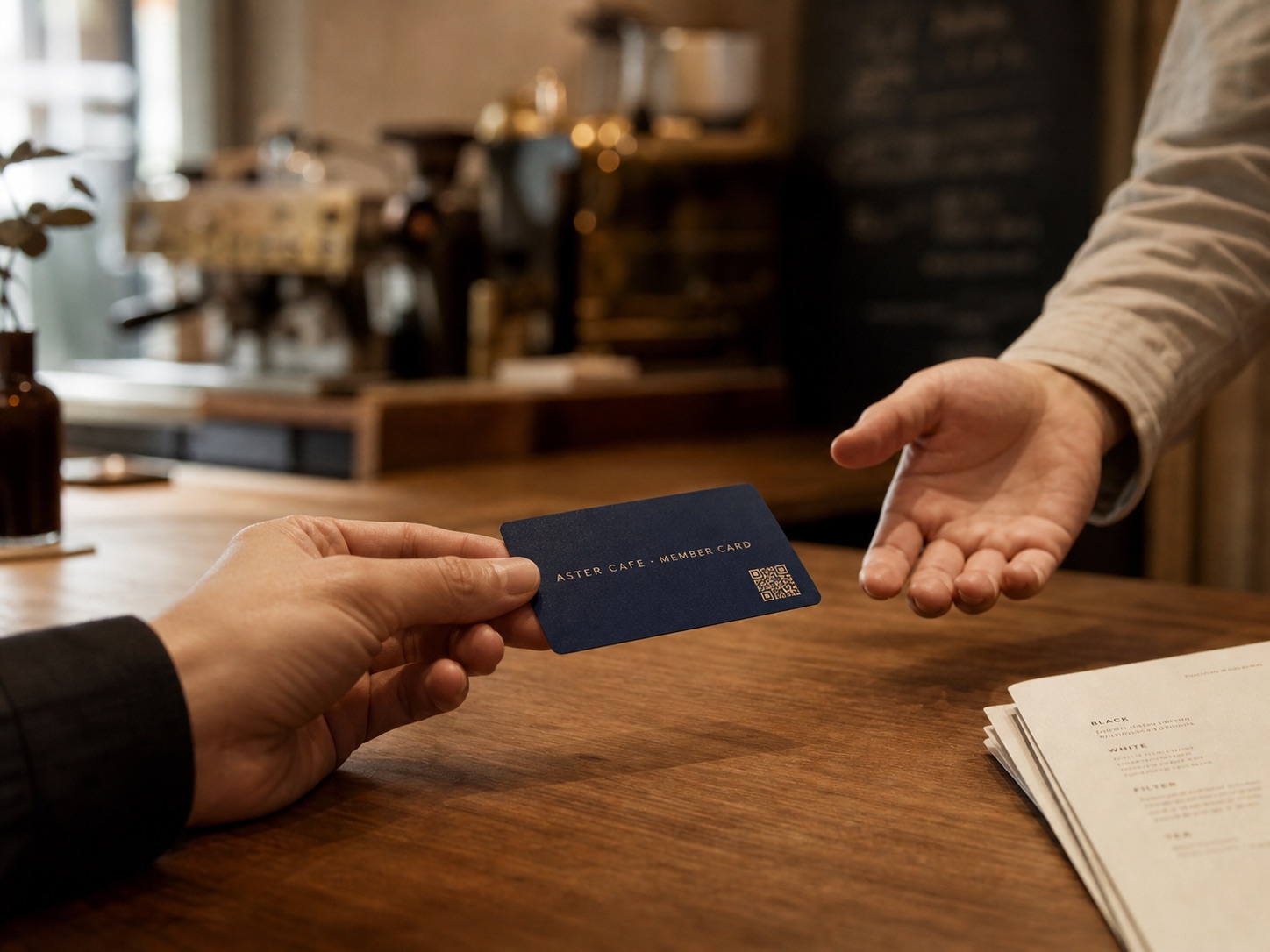
The physical NFC or QR moment solves a boring but important problem: most local businesses do not know who just visited. A chip, card, or stand turns the handoff into a customer record, a reward claim, and a permission-based follow-up path.
The research does not imply that a chip alone creates loyalty. It implies that a clear reward loop has a better shot when the business can identify the customer, reduce enrollment friction, and make the next visit feel specific.
Design rule
Use loyalty hardware to capture the customer at the moment of goodwill, then make the next reward concrete enough that the customer understands why returning soon is worth it.
Sources
- Yuping Liu, "The Long-Term Impact of Loyalty Programs on Consumer Purchase Behavior and Loyalty," Journal of Marketing, 2007.
- Leenheer, van Heerde, Bijmolt, and Smidts, "Do loyalty programs really enhance behavioral loyalty?", International Journal of Research in Marketing, 2007.
- Bolton, Kannan, and Bramlett, "Implications of Loyalty Program Membership and Service Experiences for Customer Retention and Value," Journal of the Academy of Marketing Science, 2000.
- Harvard Business Review, "The Value of Keeping the Right Customers," 2014.